
Male Yellow-rumped Warblers have a yellow rump (of course) along with yellow patches on their sides, throat and head. Females appear browner and more subdued, with blurry dark streaks on their breast.
The Yellow‑rumped Warbler breeds in mature coniferous and mixed coniferous‑deciduous forests across North America, favoring open stands, forest edges, and high‑elevation conifer forests. In winter it shifts to more open, shrub‑rich habitats such as streamside woods, and coastal dunes—where fruiting shrubs or scattered trees provide food.
Yellow-rumped Warblers often fly in a distinctive, rapid “zig‑zag” pattern.
During the breeding season the warbler is almost entirely insectivorous, feeding on a wide variety of arthropods such as caterpillars, beetles, ants, aphids, spiders, grasshoppers, and caddisflies.
In winter, when insects become scarce, it shifts to a largely frugivorous diet, consuming wax‑myrtle and bayberry berries (its digestive system can break down the waxy coating), as well as juniper, poison‑ivy, poison‑oak, greenbrier, grapes, Virginia creeper, and dogwood.
Despite its name, the yellow rump is only visible when the bird is in flight or perched with its tail spread.
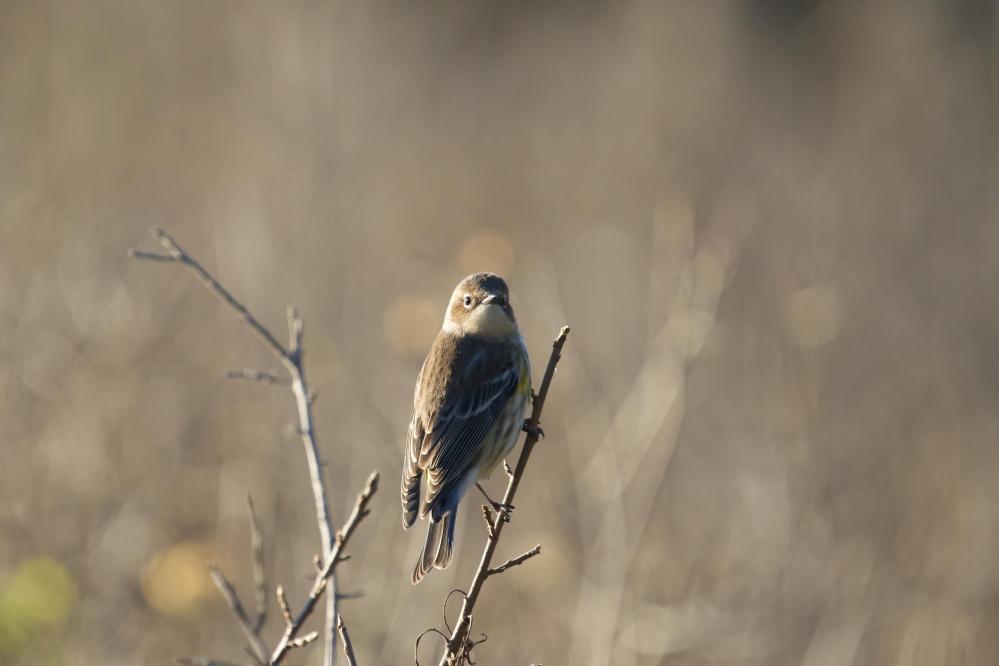
Photo by Yvonne Wright
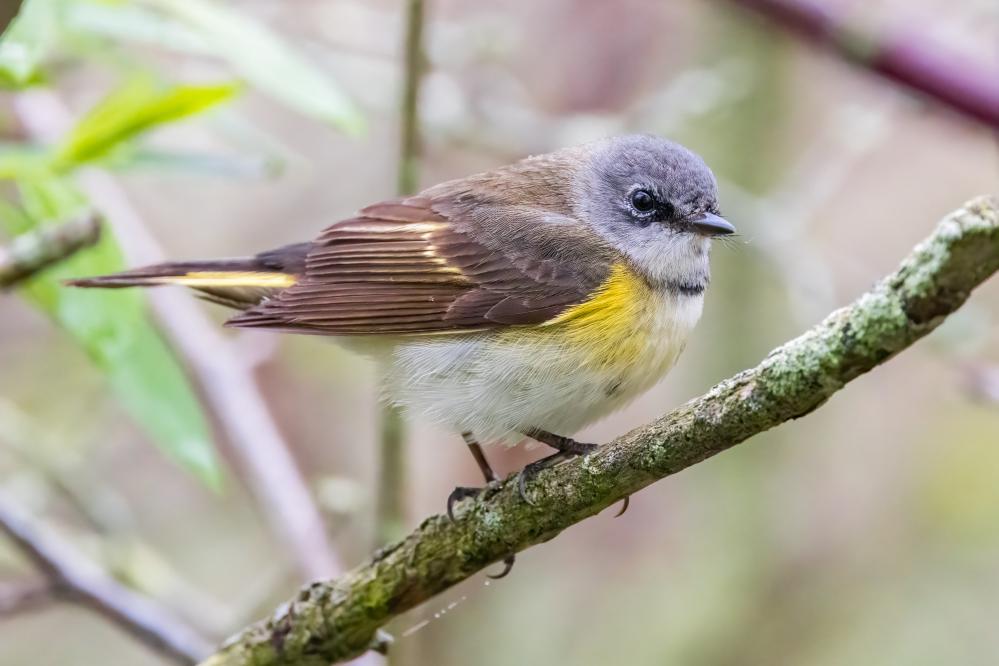
Photo by Sara Courtneidge